Risk Management: A Strategic Approach to Uncertainty
Risk management is a structured process used by individuals, businesses, and institutions to identify, analyze, and control potential threats that could negatively affect objectives. In today’s dynamic economic and business environment, uncertainty is unavoidable. Market volatility, operational disruptions, regulatory changes, technological failures, and strategic missteps can all create risks. Effective risk management does not eliminate uncertainty; instead, it prepares organizations to respond proactively and minimize adverse outcomes.
At its core, risk management supports stability, continuity, and informed decision-making. Organizations that adopt strong risk management practices are better positioned to protect assets, maintain stakeholder confidence, and achieve sustainable growth.
Understanding Risk and Risk Management
Risk refers to the possibility that actual outcomes may differ from expected outcomes, often resulting in loss, damage, or missed opportunities. Risk management is the discipline that systematically addresses these uncertainties by balancing potential rewards against possible losses.
Rather than avoiding risk entirely, modern risk management focuses on understanding risk exposure and making calculated decisions. In many cases, taking risk is essential for innovation, expansion, and competitive advantage. The key lies in managing risk intelligently rather than reacting to crises after they occur.
Objectives of Risk Management
The primary objectives of risk management include:
- Protection of Assets: Safeguarding physical, financial, and intellectual resources
- Business Continuity: Ensuring uninterrupted operations during adverse events
- Loss Minimization: Reducing the frequency and severity of potential losses
- Regulatory Compliance: Meeting legal and governance requirements
- Decision Support: Enabling informed strategic and operational decisions
By achieving these objectives, risk management contributes directly to organizational resilience and long-term success.
Types of Risks
1. Strategic Risk
Strategic risk arises from poor business decisions, ineffective planning, or failure to adapt to changing market conditions. Examples include entering unprofitable markets or ignoring competitive threats.
2. Financial Risk
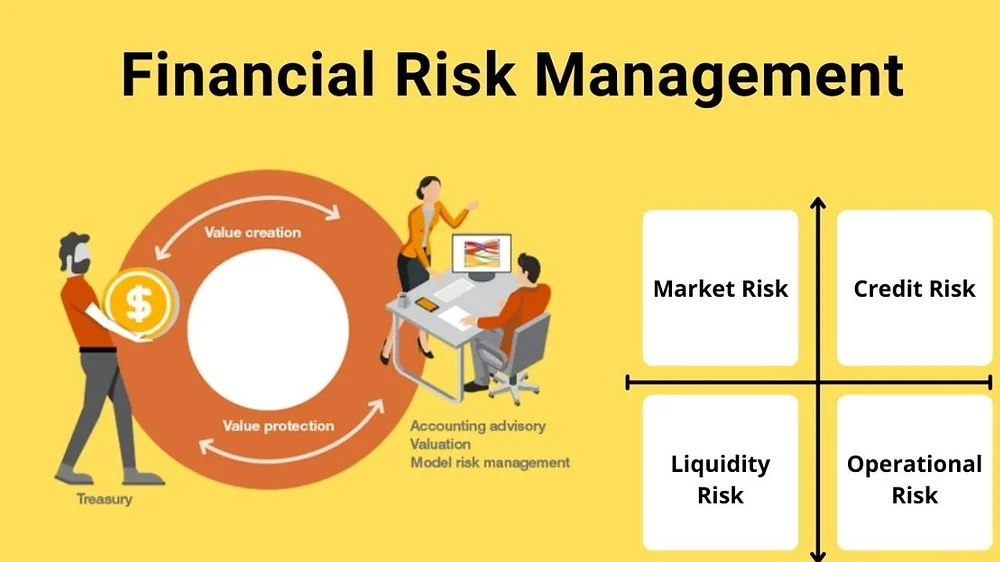
Financial risk involves exposure to losses due to market fluctuations, interest rate changes, credit defaults, or liquidity constraints. Managing financial risk is critical for maintaining profitability and solvency.
3. Operational Risk
Operational risk stems from internal processes, systems, or human errors. Supply chain disruptions, equipment failures, and employee misconduct are common operational risks.
4. Compliance and Legal Risk
This type of risk arises from violations of laws, regulations, or contractual obligations. Regulatory penalties and legal disputes can significantly damage reputation and finances.
5. Reputational Risk
Reputational risk affects public perception and stakeholder trust. Negative publicity, ethical lapses, or poor customer experiences can have long-lasting impacts.
The Risk Management Process
Risk management follows a structured and continuous process:
1. Risk Identification
The first step involves recognizing potential risks that could affect objectives. This may include internal audits, brainstorming sessions, historical data analysis, and environmental scanning.
2. Risk Assessment and Analysis
Once identified, risks are evaluated based on their likelihood and potential impact. This helps prioritize risks and allocate resources efficiently.
3. Risk Evaluation
In this stage, organizations determine which risks are acceptable and which require immediate action. Risk tolerance levels play a crucial role in decision-making.
4. Risk Treatment and Mitigation
Risk treatment strategies include:
- Risk Avoidance: Eliminating activities that generate risk
- Risk Reduction: Implementing controls to minimize impact or probability
- Risk Transfer: Shifting risk through insurance or outsourcing
- Risk Acceptance: Acknowledging risk when costs of mitigation exceed benefits
5. Monitoring and Review
Risk management is an ongoing process. Continuous monitoring ensures that controls remain effective and emerging risks are addressed promptly.
Importance of Risk Management in Business
Risk management is not merely a defensive mechanism; it is a strategic enabler. Organizations with robust risk management frameworks can anticipate challenges, respond quickly to disruptions, and maintain competitive advantage.
Effective risk management enhances:
- Operational Efficiency by reducing unexpected interruptions
- Financial Stability through controlled exposure to losses
- Strategic Agility by supporting informed risk-taking
- Stakeholder Confidence by demonstrating preparedness and governance
In contrast, weak risk management can lead to financial distress, reputational damage, and even organizational failure.
Risk Management Tools and Techniques
Several tools support effective risk management, including:
- Risk Registers: Centralized documentation of identified risks
- SWOT Analysis: Evaluating strengths, weaknesses, opportunities, and threats
- Scenario Analysis: Assessing outcomes under different conditions
- Key Risk Indicators (KRIs): Metrics that signal rising risk levels
- Internal Controls: Policies and procedures that reduce exposure
Technology has further enhanced risk management through data analytics, automation, and real-time monitoring systems.
Risk Management and Organizational Culture
A strong risk management culture is essential for success. This culture encourages transparency, accountability, and open communication about risks. Employees at all levels should understand their role in identifying and managing risk.
Leadership commitment is critical in embedding risk awareness into daily operations and strategic planning. When risk management becomes part of organizational mindset rather than a compliance exercise, it delivers greater value.
Conclusion
Risk management is a vital discipline that enables individuals and organizations to navigate uncertainty with confidence. By systematically identifying, assessing, and controlling risks, decision-makers can protect assets, enhance resilience, and support sustainable growth.
In an increasingly interconnected and volatile world, effective risk management is no longer optional—it is a strategic necessity. Organizations that embrace proactive risk management are better equipped to transform uncertainty into opportunity and ensure long-term success.