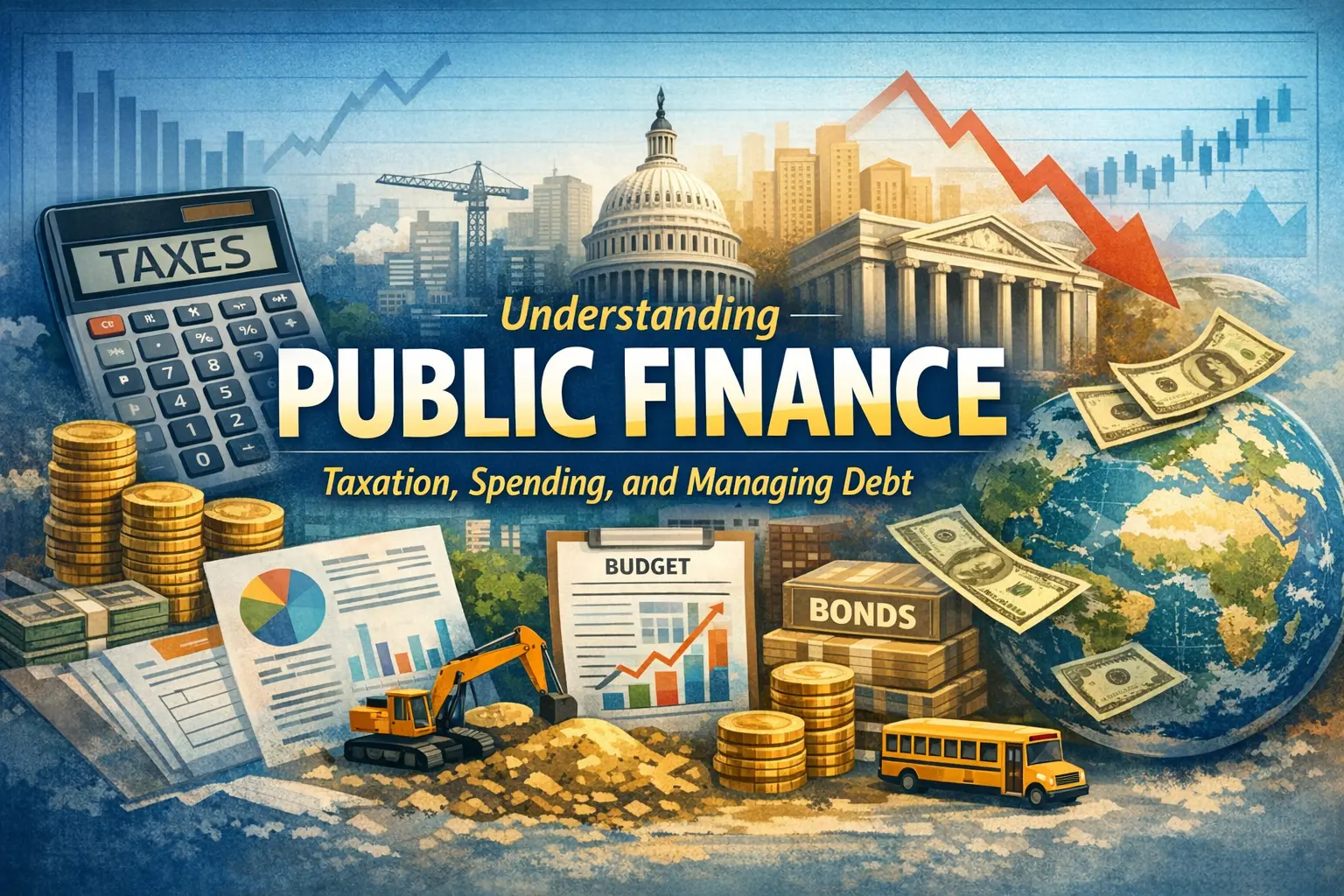
Public Finance: Understanding How Governments Manage Money
Public finance is a crucial branch of economics that examines how governments collect revenue, allocate resources, and manage expenditures to achieve economic stability and social welfare. Unlike private finance, which focuses on individual or corporate decision-making, public finance deals with financial activities at the local, state, and national levels of government. Its primary objective is to ensure efficient use of public resources while promoting economic growth, equity, and long-term fiscal sustainability.
In modern economies, public finance plays a decisive role in shaping development policies, influencing income distribution, and stabilizing markets during economic fluctuations. Through instruments such as taxation, public expenditure, budgeting, and public debt management, governments attempt to balance economic efficiency with social responsibility.
Meaning and Scope of Public Finance
Public finance refers to the study of government revenue and expenditure and their impact on the economy. It analyzes how public authorities raise funds, how those funds are spent, and how deficits or surpluses are managed over time. The scope of public finance is broad, covering fiscal policy formulation, allocation of public resources, redistribution of income, and stabilization of the economy.
At different administrative levels—local municipalities, state governments, and national authorities—public finance decisions directly affect citizens’ daily lives. From infrastructure development and healthcare funding to education and social security, public finance determines the quality and accessibility of public services.
Taxation: The Backbone of Government Revenue
Taxation is the primary source of government income and a central component of public finance. Taxes are compulsory payments imposed on individuals and organizations to fund public services and governmental functions. A well-designed tax system aims to generate sufficient revenue while minimizing economic distortions and ensuring fairness.
Types of Taxes
- Income Tax
Income tax is levied on individuals’ and corporations’ earnings. Progressive income tax systems, where tax rates increase with income levels, are often used to reduce income inequality and promote social justice. - Sales and Consumption Taxes
Sales tax or value-added tax (VAT) is imposed on goods and services at the point of sale. These taxes are relatively easy to collect and provide a steady revenue stream, though they can be regressive if not carefully structured. - Property Tax
Property tax is charged on real estate ownership and is commonly used by local governments to fund municipal services such as roads, sanitation, and public safety.
Through taxation, governments not only raise revenue but also influence economic behavior. Tax incentives may encourage investment, savings, or environmentally sustainable practices, while higher taxes on harmful goods can discourage their consumption.
Government Expenditure: Allocating Public Resources
Government expenditure refers to the spending of public funds on goods and services to meet societal needs. Effective public spending is essential for economic development, social welfare, and national security.
Major Areas of Public Spending
- Infrastructure Development
Investment in roads, bridges, transportation systems, and energy networks supports economic growth by improving productivity and connectivity. - Social Programs
Governments allocate significant resources to healthcare, education, housing, and social security. These expenditures aim to improve living standards, reduce poverty, and promote equal opportunities. - Defense and Administration
Spending on defense, law enforcement, and public administration ensures national security, governance, and the rule of law.
Public expenditure decisions reflect government priorities and policy objectives. Efficient allocation ensures that limited resources produce maximum social benefit, while poor spending choices can lead to waste and fiscal stress.
National Budgets: Planning and Control Mechanism
The national budget is a comprehensive financial statement outlining the government’s expected revenue and planned expenditure for a specific fiscal year. It serves as a key policy document that reflects economic goals, development strategies, and fiscal discipline.
Budgets are typically categorized into:
- Balanced Budget, where revenue equals expenditure
- Surplus Budget, where revenue exceeds expenditure
- Deficit Budget, where expenditure surpasses revenue
In practice, many governments operate with deficit budgets to stimulate economic growth, especially during recessions. However, persistent deficits can lead to rising public debt, making budgetary control and transparency essential.
Public Debt and Sovereign Debt Management
When government expenditure exceeds revenue, borrowing becomes necessary. Public debt refers to the total amount owed by the government to domestic or foreign lenders. Governments raise funds by issuing sovereign bonds, treasury bills, or loans from financial institutions.
Importance of Public Debt
Public debt can be a useful tool for financing large-scale projects, responding to economic crises, or supporting long-term development. When used prudently, it can enhance productive capacity and future growth.
However, excessive debt poses risks such as higher interest burdens, reduced fiscal flexibility, and potential loss of investor confidence. Therefore, effective debt management focuses on maintaining debt at sustainable levels while minimizing borrowing costs and risks.
Fiscal Policy and Economic Stability
Fiscal policy is a core element of public finance, involving the use of taxation and government spending to influence economic conditions. During economic downturns, expansionary fiscal policy—higher spending and lower taxes—can stimulate demand and employment. Conversely, contractionary fiscal policy is used to control inflation during periods of economic overheating.
Through fiscal policy, governments aim to achieve macroeconomic stability, control inflation, reduce unemployment, and promote long-term growth.
Public finance is fundamental to the functioning of modern governments and economies. By managing taxation, public expenditure, budgeting, and public debt, governments strive to balance economic efficiency with social welfare. Sound public finance practices ensure sustainable development, equitable resource distribution, and economic resilience in the face of challenges.
Understanding public finance not only helps policymakers make informed decisions but also enables citizens to better appreciate how public resources are generated and utilized. In an increasingly complex global economy, effective public finance management remains essential for achieving inclusive growth and long-term prosperity.