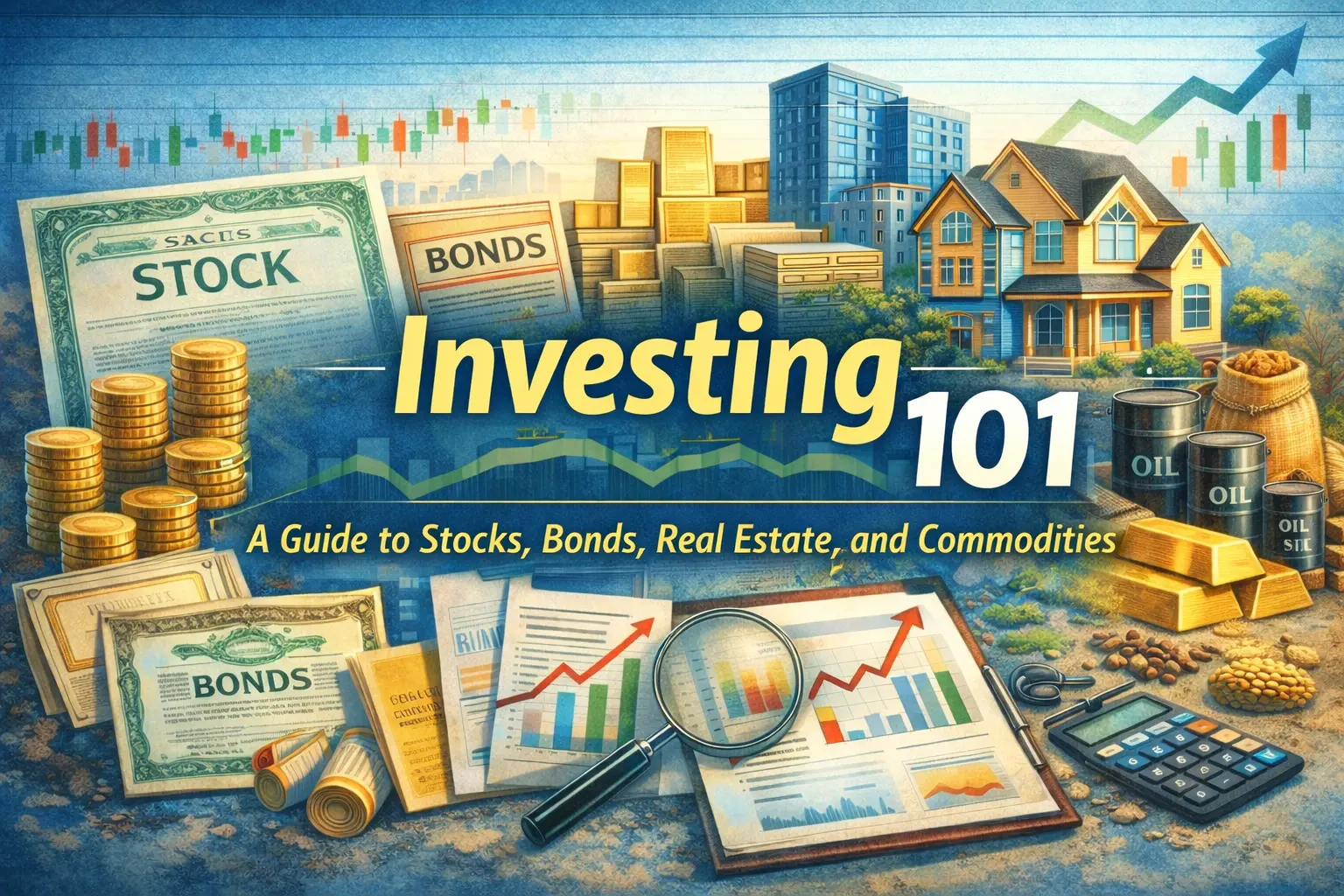
Investments: A Comprehensive Guide to Growing Your Wealth
Investments play a vital role in personal finance and economic growth. They represent the commitment of money or resources today with the expectation of generating income or profit in the future. In an increasingly complex financial world, understanding investments is no longer optional—it is essential for achieving long-term financial security, protecting purchasing power against inflation, and meeting life goals such as education, home ownership, and retirement.
This article provides a clear and structured overview of investments, covering their meaning, objectives, major types, risk–return relationship, and the importance of strategic investment planning.
What Are Investments?
An investment is the allocation of funds into assets or instruments with the expectation of earning returns over time. Unlike savings, which prioritize safety and liquidity, investments focus on growth and income generation. Returns may come in the form of interest, dividends, rental income, or capital appreciation.
Investments can be made by individuals, businesses, or governments, and they form the backbone of capital formation in an economy. When investors allocate funds efficiently, businesses expand, employment increases, and overall economic development is accelerated.
Objectives of Investment
People invest for different reasons depending on their financial situation, risk tolerance, and time horizon. Common objectives include:
- Capital Appreciation: Increasing the value of invested money over time
- Regular Income: Earning consistent returns through interest, dividends, or rent
- Capital Preservation: Protecting wealth from inflation and market volatility
- Wealth Creation: Achieving long-term financial independence
- Tax Efficiency: Reducing tax liability through eligible investment instruments
Clearly defining investment objectives is the first step toward building a successful investment strategy.
Major Types of Investments
1. Stocks (Equities)
Stocks represent ownership in a company. By purchasing shares, investors become partial owners and may benefit from dividends and price appreciation. Stocks generally offer higher potential returns compared to other investments but also carry higher risk due to market fluctuations.
2. Bonds (Fixed-Income Securities)
Bonds are debt instruments issued by governments or corporations to raise funds. Investors earn fixed interest over a specified period and receive the principal at maturity. Bonds are considered relatively safer than stocks and provide stable income, making them suitable for conservative investors.
3. Mutual Funds and Exchange-Traded Funds (ETFs)
Mutual funds pool money from multiple investors and invest in diversified portfolios of stocks, bonds, or other assets. ETFs operate similarly but are traded on stock exchanges. These instruments offer diversification, professional management, and accessibility for small investors.
4. Real Estate
Real estate investments include residential, commercial, and industrial properties. Returns are generated through rental income and property value appreciation. While real estate can provide steady income and hedge against inflation, it requires significant capital and has lower liquidity.
5. Commodities
Commodities such as gold, oil, agricultural products, and metals are tangible assets traded in global markets. They are often used to diversify portfolios and protect against inflation and currency risks.
6. Alternative Investments
These include private equity, hedge funds, cryptocurrencies, and collectibles. While they may offer high returns, alternative investments often involve higher risk, limited transparency, and regulatory complexity.
Risk and Return Relationship
One of the fundamental principles of investments is the risk–return trade-off. Generally, higher potential returns are associated with higher risk. Understanding this relationship helps investors make informed decisions.
- Low-Risk Investments: Government bonds, fixed deposits
- Moderate-Risk Investments: Corporate bonds, balanced mutual funds
- High-Risk Investments: Stocks, commodities, cryptocurrencies
Risk can be influenced by factors such as market volatility, economic conditions, interest rates, and company performance. Investors must assess their risk tolerance before selecting investment options.
Portfolio Diversification and Management
Portfolio management involves selecting and managing a mix of investments to achieve financial goals while minimizing risk. Diversification is a key strategy in portfolio management, as it spreads investments across different asset classes, industries, and regions.
A well-diversified portfolio reduces the impact of poor performance in any single investment. Portfolio management also includes periodic review and rebalancing to align investments with changing market conditions and personal goals.
Investment Time Horizon
The investment time horizon refers to the length of time an investor plans to hold an investment before needing the funds. Time horizon significantly influences investment choices:
- Short-Term (less than 3 years): Low-risk instruments like liquid funds
- Medium-Term (3–7 years): Balanced funds, bonds
- Long-Term (7+ years): Stocks, equity mutual funds, real estate
Longer time horizons allow investors to tolerate short-term volatility and benefit from compounding.
Role of Investment Theory
Investment theory provides the foundation for rational investment decision-making. Concepts such as diversification, efficient markets, asset allocation, and modern portfolio theory help investors understand how markets function and how risk can be optimized.
While theories guide strategy, practical investing also requires behavioral discipline, patience, and continuous learning.
Importance of Investments in Financial Planning
Investments are central to effective financial planning. They help individuals meet long-term goals, cope with inflation, and create a financial cushion for emergencies. Without investing, savings alone may fail to preserve purchasing power over time.
For businesses and governments, investments drive innovation, infrastructure development, and economic stability. Thus, investments contribute not only to personal prosperity but also to national growth.
Investments are a powerful tool for building wealth, securing the future, and achieving financial independence. By understanding different investment options, assessing risk and return, and applying disciplined portfolio management, investors can navigate financial markets more confidently.
Successful investing does not rely on speculation or short-term gains but on informed decisions, clear objectives, and a long-term perspective. In a world of constant economic change, a sound investment approach remains one of the most effective ways to achieve sustainable financial growth.